How Fiber Optic Cable Is Transforming Pakistan's Digital Infrastructure
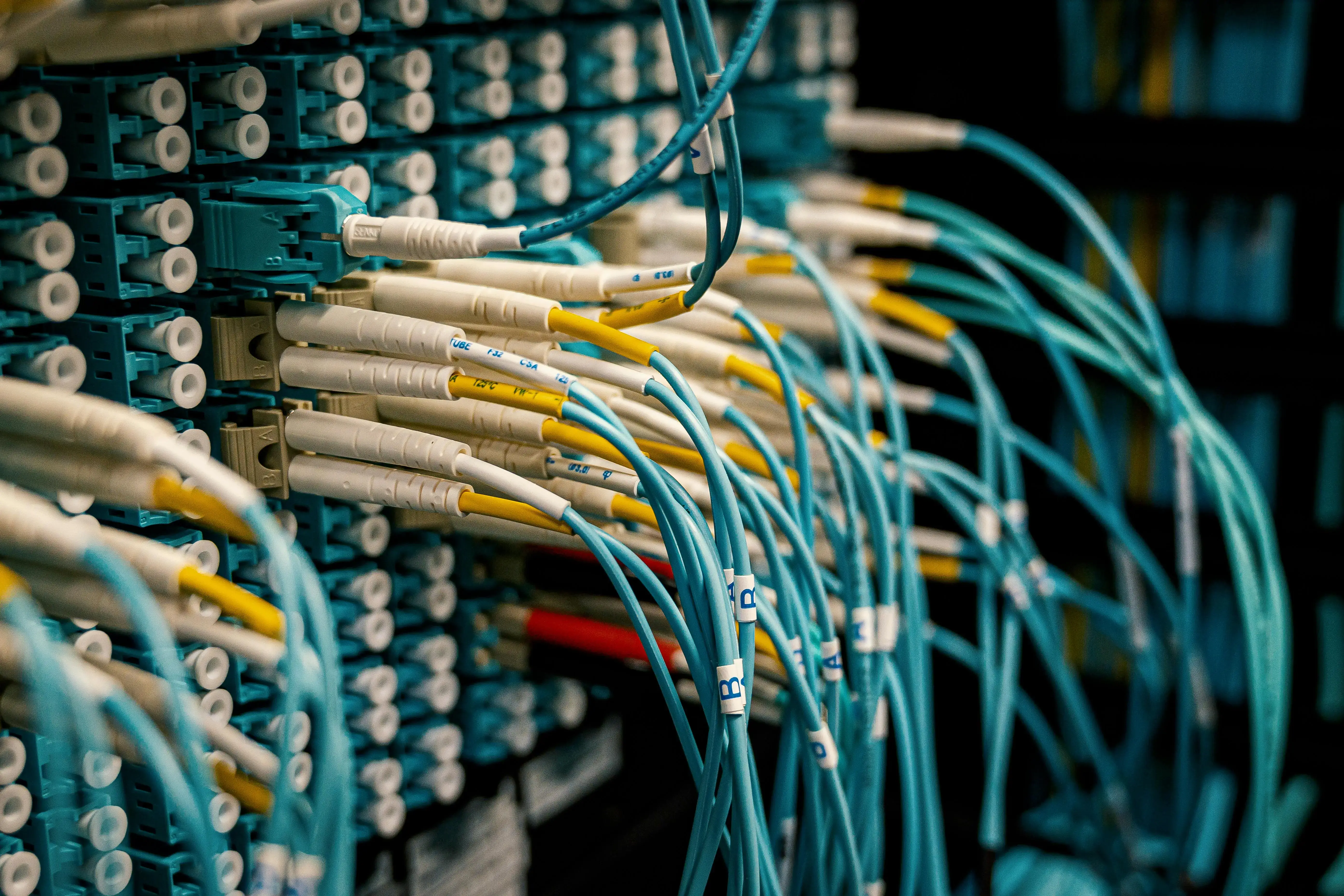
Pakistan stands at a critical inflection point in its digital journey. With a population exceeding 240 million and a rapidly growing middle class hungry for connectivity, the country's demand for high-speed internet has never been more urgent — or more achievable. At the heart of this transformation is fiber optic cable technology, quietly revolutionising how Pakistanis communicate, work, and do business.
From the corridors of Islamabad's diplomatic enclave to the bustling commercial districts of Karachi and Lahore, fiber optic infrastructure is being laid at an unprecedented pace. This article explores the scope, the drivers, and the real-world impact of Pakistan's fiber revolution — and why it matters for every business and household in the country.
Why Fiber Optic? The Technology Explained
Unlike traditional copper cables that transmit data as electrical signals, fiber optic cables carry data as pulses of light through strands of pure glass or plastic thinner than a human hair. This fundamental difference translates into dramatic real-world advantages:
- Blazing Speed: Fiber can deliver symmetrical upload and download speeds of up to 1 Gbps and beyond — making it 100× faster than standard ADSL.
- Ultra-Low Latency: Signal delay (latency) drops to under 5 milliseconds, critical for video conferencing, cloud applications, and online gaming.
- Superior Reliability: Fiber is immune to electromagnetic interference from power lines and radio signals — a persistent problem with copper in dense urban environments like Rawalpindi and Lahore.
- Long-Distance Performance: Light signals degrade far less over distance than electrical signals, making fiber ideal for connecting Pakistan's geographically spread cities and districts.
- Future-Proof Scalability: The same physical fiber cable can carry far greater bandwidth with software and hardware upgrades at the endpoints — protecting today's investment for decades.
A single strand of fiber optic cable — thinner than a human hair — can theoretically carry the equivalent of over 25,000 phone calls simultaneously. Pakistan's national fiber backbone is built on this extraordinary capacity.
Pakistan's Current Fiber Landscape
Pakistan's fiber optic story began in earnest with PTCL's long-haul backbone in the early 2000s, but the true last-mile revolution — bringing fiber directly into homes and offices — has accelerated dramatically since 2022. Several forces are converging to drive this growth.
Government & Regulatory Push
The Government of Pakistan, through the Ministry of IT and Telecom and the Pakistan Telecommunication Authority (PTA), has made broadband expansion a national priority. The National Broadband Policy and the Universal Service Fund (USF) are channelling billions of rupees into fiber rollout across underserved areas, including Khyber Pakhtunkhwa, Balochistan, and Azad Kashmir.
Private Sector Investment
Beyond PTCL, a new generation of Internet Service Providers (ISPs) — including Transworld, Fiberlink, StormFiber, and regional players — are racing to deploy GPON (Gigabit Passive Optical Network) infrastructure in Tier-1 and Tier-2 cities. Islamabad, Rawalpindi, Lahore, Karachi, and Faisalabad are seeing intense fiber buildout competition, which is driving down prices and improving service quality for consumers and businesses alike.
Corporate Demand
Pakistan's growing IT export sector — which crossed $2.6 billion in FY2024-25 — is a voracious consumer of reliable, high-speed connectivity. Tech parks in Islamabad's I-8 and I-9 sectors, Lahore's Arfa Software Technology Park, and Karachi's creative districts are being prioritised in fiber rollout plans to support the country's remote working and IT services boom.
Real-World Applications Across Pakistan
FTTH for Residential Users
Fiber-to-the-Home (FTTH) is transforming Pakistani households. Families in upscale and middle-income neighbourhoods of Rawalpindi, Islamabad, Defence Housing Authority (DHA) Lahore, and Clifton Karachi now enjoy fiber connections that support 4K streaming, remote learning, multiple simultaneous video calls, and smart home devices — all without the buffering that plagued older ADSL connections.
The COVID-19 pandemic was a watershed moment: with schools, offices, and businesses shifting online, the inadequacy of legacy copper networks became impossible to ignore. Fiber was no longer a luxury — it became infrastructure as essential as electricity.
Enterprise Connectivity
For Pakistani businesses, fiber is the foundation of digital transformation. Dedicated fiber leased lines give enterprises the symmetrical, low-latency connectivity they need to run cloud ERP systems, video-conference with international clients, host on-premises data centres, and support distributed branch offices.
At Celmore Technologies, we have deployed fiber optic infrastructure for enterprise clients across Rawalpindi and Islamabad — from corporate headquarters to manufacturing facilities — enabling them to move confidently to cloud platforms and achieve measurable productivity gains.
Safe City & Government Networks
Pakistan's Safe City initiatives in Islamabad, Lahore, and Peshawar depend entirely on robust fiber optic backbone networks. Thousands of HD surveillance cameras, traffic management sensors, and emergency response systems generate enormous volumes of data that only fiber can reliably transport in real time. Without high-capacity fiber, intelligent city infrastructure simply cannot function.
| Application | Minimum Speed Required | Technology Used |
|---|---|---|
| Residential Streaming (4K) | 25 Mbps | GPON-FTTH |
| Corporate Office (50 users) | 100 Mbps dedicated | Fiber Leased Line |
| Safe City CCTV Backbone | 1–10 Gbps | Dark Fiber / DWDM |
| Data Centre Interconnect | 10–100 Gbps | DWDM Fiber |
| Rural Broadband (USF) | 10–50 Mbps | FTTH / FTTx |
Challenges Facing Fiber Deployment in Pakistan
The fiber revolution is real, but it is not without friction. Several challenges continue to slow deployment, particularly outside major cities.
- Right-of-Way: Obtaining permissions to dig trenches and lay cables through public roads and private property remains a bureaucratic hurdle in many municipalities.
- Power Reliability: Fiber network equipment — particularly Optical Line Terminals (OLTs) and active nodes — require stable power. Frequent load-shedding in smaller cities remains a challenge that requires investment in battery backup and solar solutions.
- Last-Mile Economics: Laying fiber to rural and peri-urban areas is expensive relative to the potential subscriber base. This is where USF funding and innovative business models (like shared infrastructure) become essential.
- Skilled Workforce: Installing, splicing, and maintaining fiber optic cable requires trained technicians. Pakistan needs a larger pool of certified fiber engineers to meet growing demand — a gap that companies like Celmore are actively working to address.
The Road Ahead: Pakistan's Fiber Future
Despite the challenges, the trajectory is unmistakably positive. Pakistan's fiber optic market is projected to grow at a CAGR exceeding 18% through 2030, driven by:
- Continued government investment in USF-funded rural broadband projects
- 5G rollout, which requires a dense fiber backhaul network to connect cell towers
- Expanding data centre industry requiring high-capacity fiber interconnects
- Growing IT export ambitions that make reliable connectivity a matter of national economic strategy
Pakistan's fiber buildout is not just about faster Netflix. It is the foundational infrastructure for the country's digital economy, e-government services, smart cities, and the future of work. Every kilometre of fiber laid is an investment in Pakistan's competitive position in the global digital economy.
How Celmore Technologies Is Leading Pakistan's Fiber Rollout
Celmore Technologies has been at the forefront of fiber optic installation, maintenance, and network design across Pakistan's twin cities of Rawalpindi and Islamabad, with project reach extending to Lahore and beyond. Our capabilities span the full fiber value chain:
- Network design, route survey, and engineering
- OSP (Outside Plant) cable laying — aerial and underground
- Fiber splicing, termination, and OTDR testing
- GPON-FTTH deployment for residential and commercial buildings
- Enterprise fiber leased-line installation and maintenance
- Safe City and government network backbone cabling
Our team of certified fiber engineers brings international best practices to every project, ensuring networks that perform reliably from day one and scale as demands grow. Whether you are an ISP looking to expand your FTTH footprint or an enterprise needing a dedicated fiber connection, Celmore Technologies delivers end-to-end solutions built to last.
Ready to Upgrade Your Connectivity?
Talk to our fiber optic experts about your network requirements across Pakistan.
Get a Free Consultation